Home rehabilitation
Returning home after surgery (hip, knee or shoulder replacement) marks the beginning of the most crucial phase: rehabilitation. Often, the idea of having to travel straight away, while dealing with pain, swelling and reduced mobility, involves significant effort and, especially for those who live alone, there may initially be an inability to drive and therefore to attend appointments at a physiotherapy clinic. This can delay the start of rehabilitation and risk slowing down the recovery process. It is here that home physiotherapy proves to be not just a convenience, but a true therapeutic strategy to accelerate and optimise your recovery. The period immediately following discharge from hospital is the most critical.
It is essential not to interrupt rehabilitation after returning home. When restarting is delayed due to logistical difficulties or excessive fatigue related to travelling, progress achieved in hospital may slow down. If not adequately stimulated, and instead kept too still (due to pain, swelling, precaution and/or fear), the joint may quickly become stiff, remain swollen and gradually lose more and more muscle strength. Choosing home physiotherapy, on the other hand, ensures immediate continuity of treatment. The clinical advantage lies in the possibility of rehabilitating the body within its functional environment. Daily life takes place among the furniture at home, getting in and out of bed, using the bathroom and managing steps.
The benefits of home rehabilitation
With a home-based approach, the therapist can maximise results in a unique way:
- Safety and prevention: identifying and correcting environmental risks (such as slippery rugs or narrow passages) that could lead to falls.
- Practical functionality: performing targeted exercises to address real-life challenges, such as getting up from a favourite armchair or moving safely along a corridor.
- Rapid adaptation: modifying the environment to make everyday movements safer and easier, accelerating the return to independence.
This practical and personalised approach ensures that every motor improvement is immediately applicable to daily routines, making recovery faster and more effective.
A practical example
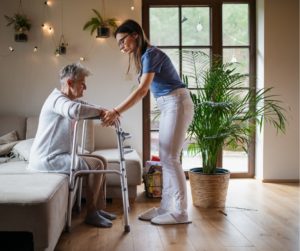
To better explain these concepts, here is a practical example: a patient who has just undergone total hip replacement surgery. Typically, the first few days at home are marked by extreme caution, reduced overall movement and increased tissue sensitivity (that is, localised pain with swelling). At home, the physiotherapist can focus on the correct use of crutches (or a walking frame) on different surfaces (flat ground, slopes or stairs), on managing postural changes (such as getting out of bed or sitting down), and on safely learning essential movements. They can also set up a strengthening exercise programme using what is available at home, thereby stimulating the operated limb in a correct and gradual recovery, helping the patient return to their best physical and functional condition.
These are all crucial elements that improve safety, reduce the fear of falling and ultimately shorten recovery time.
If you would like to find out more about home rehabilitation, please do not hesitate to contact us here at Polispecialistico Paradiso!