What are fine motor skills?
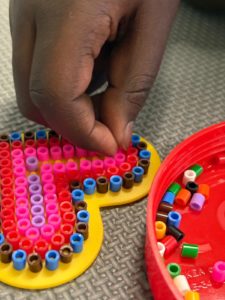
Fine motor skills include all precise and coordinated movements involving the hands and fingers. They are essential for many everyday activities: eating with cutlery, getting dressed, writing, drawing, building, using school tools, or practising sports and musical activities.
The milestones
The development of fine motor skills begins in the first months of life and continues for many years, gradually evolving through experience, play, and exploration of the environment.
Each child develops at their own pace, but there are indicative milestones that help us observe how these skills are built over time.
- 0–6 months: first experiences with the hands
In the first months of life, hand movements are initially guided by automatic reflexes. One of the best known is the palmar grasp reflex: when the palm is stimulated, the newborn automatically closes their fingers. Over time, these reflexes gradually give way to more voluntary movements. The child begins to observe their hands, bring them to their mouth, and attempt to grasp objects. These early attempts form the basis of hand-eye coordination. - 6–12 months: discovering the pincer grip
Between six and twelve months, an important step occurs: the child develops the pincer grip, the ability to use thumb and index finger to pick up small objects. This allows the child to handle food pieces and small objects with increasing precision. At this stage, the child explores extensively: touching, manipulating, dropping, and picking up objects, gradually improving control and coordination. - 1–3 years: first independent activities
During the second and third year, fine motor skills develop rapidly. The child begins to use cutlery and cups, initially with imprecise movements. They also start building and manipulating: stacking blocks, opening and closing containers, turning pages, and making early scribbles with pencils or markers. - 3–6 years: drawing, scissors and first letters
In preschool years, manual skills become more precise. Children begin to colour within lines, use scissors, glue, and create simple crafts. They also start structured drawing and early writing, copying shapes and experimenting with letters, especially those of their name. These skills prepare the child for primary school. - 6–8 years: development of writing
With the start of primary school, fine motor skills are further strengthened. The child develops handwriting skills and learns to write with continuity and precision. They learn different writing styles (capital letters, lowercase, cursive) and manage tools such as pencils, pens, erasers, and rulers. Independence also increases in daily tasks like tying shoelaces and fastening buttons. - 8–10 years: coordination and complex activities
Skills become more refined. Many children begin sports requiring coordination, such as tennis, basketball, or golf. Musical activities also support development: playing instruments like piano, flute, or guitar requires precise finger movements. - 10–14 years: consolidation of skills
During pre-adolescence, fine motor skills are generally well established. The child develops a personal handwriting style and handles school tasks requiring precision, such as technical drawing. They use tools like rulers, set squares, compasses, and protractors with accuracy and control.
The importance of respecting development timing
It is essential to support children while respecting their developmental pace. Forcing skills too early can be counterproductive, leading to frustration and reduced self-esteem.
At the same time, careful observation is important. If difficulties arise, targeted activities can help.
A strengthening programme guided by professionals and supported by the family can improve skills and confidence, promoting autonomy, participation, and overall well-being.
If you want to know more about fine motor skills in children do not hesitate to contact us here at Polispecialistico Paradiso!