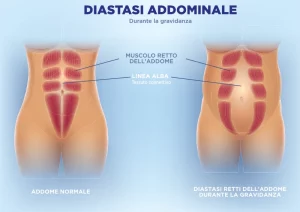
What is abdominal diastasis during pregnancy?
Rectus abdominis diastasis is the separation of the abdominal muscles caused by the widening of the linea alba, a band of fibrous connective tissue that runs vertically along the centre of the abdomen. One of the main hormones responsible for this widening during pregnancy is relaxin, which causes general ligament laxity, helping to relax the pelvic ligaments and soften and widen the cervix in preparation for childbirth.
Alongside the hormonal softening of the linea alba, the growing baby progressively increases tension on the abdominal wall. The stress placed on an already weakened structure predisposes it to separation, resulting in rectus diastasis.
Abdominal diastasis is generally defined as a gap greater than 25 mm between the rectus abdominis muscles. Any separation exceeding 2 cm (or approximately two finger-widths) is considered significant. It may occur above, below or at the level of the navel.
Why is it important to practise Pilates during pregnancy and postnatally?
As pregnancy progresses, the increasing size and weight of the uterus affect the musculoskeletal structure of the trunk, increasing the distance between muscle insertions and causing muscular stretching. Women with abdominal diastasis may experience functional issues such as abdominal weakness, lower back pain and pelvic floor dysfunction, negatively impacting quality of life.
The incidence is higher in multiparous women, as the muscles have undergone repeated stretching.
The transversus abdominis, pelvic floor, deep multifidus and diaphragm form a muscular cylinder that supports the spine and pelvis. These deep stabilising muscles of the core work together to maintain trunk stability. Strengthening these muscles through Pilates during the pre- and postnatal period helps create a supportive “muscular corset”.
Why is Pilates effective in preventing abdominal diastasis?
One of the fundamental principles of Pilates is “centring”: all movement originates from the core. Core stability exercises significantly enhance the recruitment of the deep stabilising muscles (transversus abdominis, pelvic floor, deep multifidus and diaphragm), improving strength and coordination of the abdominal muscles and increasing stability in this region.
In conclusion, Pilates can be a valuable ally in preventing or consciously managing abdominal diastasis during pregnancy and after childbirth. Working with qualified instructors ensures exercises are tailored to the body’s changes and individual needs. However, it is essential to consult your doctor before beginning any programme, as only a healthcare professional can determine whether exercise is appropriate and safe for your level of diastasis. Listening to your body, progressing gradually and seeking professional guidance are key to safe and effective movement.
Our team at Polispecialistico Paradiso is qualified to support you throughout this special journey, offering personalised guidance and care. Please feel free to contact us for further information or to book a consultation.